Planning moves on enchanted tile boards
Matching boards reward patience more than speed. This guide walks you through reading the layout, building combinations and clearing blockers so each move does more work.
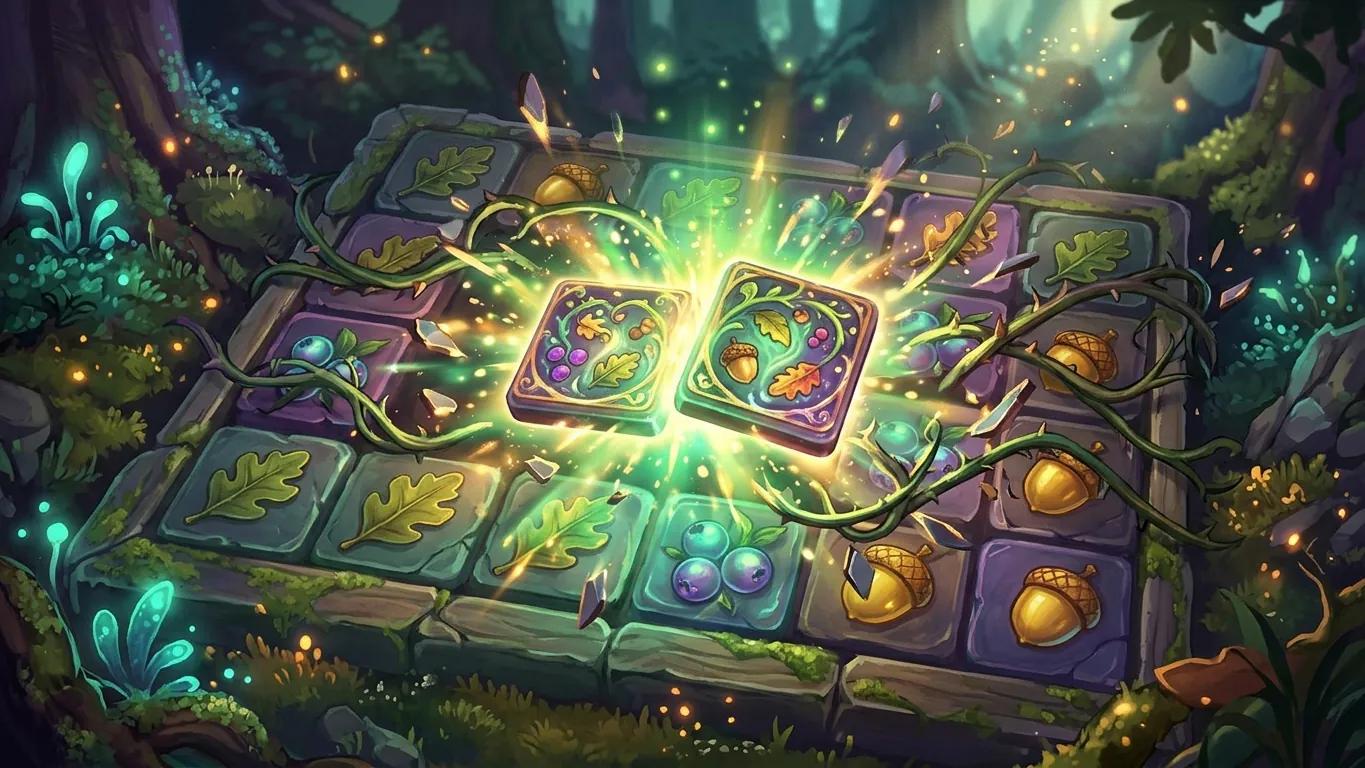
Read the whole board before your first move
It is tempting to make the first match you spot, but the opening seconds of a level are the best time to slow down. Look at the goal first: are you collecting a certain tile, clearing blockers, or bringing an item down to the bottom row?
Then scan the layout. Notice where the blockers sit, which areas are hard to reach, and where tiles fall in from. A level that asks you to free trapped fireflies in the corners plays very differently from one that wants you to collect blue petals.
Once you know the goal and the terrain, every move becomes a decision instead of a reflex.
Why matches near the bottom often help
In most tile-matching games, new tiles drop from the top when old ones are cleared. Matching near the bottom of the board shifts everything above, which can set up chain reactions you did not have to plan yourself.
Matching near the top, by contrast, usually only changes a small area. That is useful when you need precision, for example when a special tile is almost ready and you do not want the board to reshuffle.
A helpful habit is to ask yourself whether you want the board to move a lot or a little. Early in a level, extra movement can be a gift. Near the end, when you need specific tiles in specific places, steadiness matters more.
Clearing vines, stones and frost
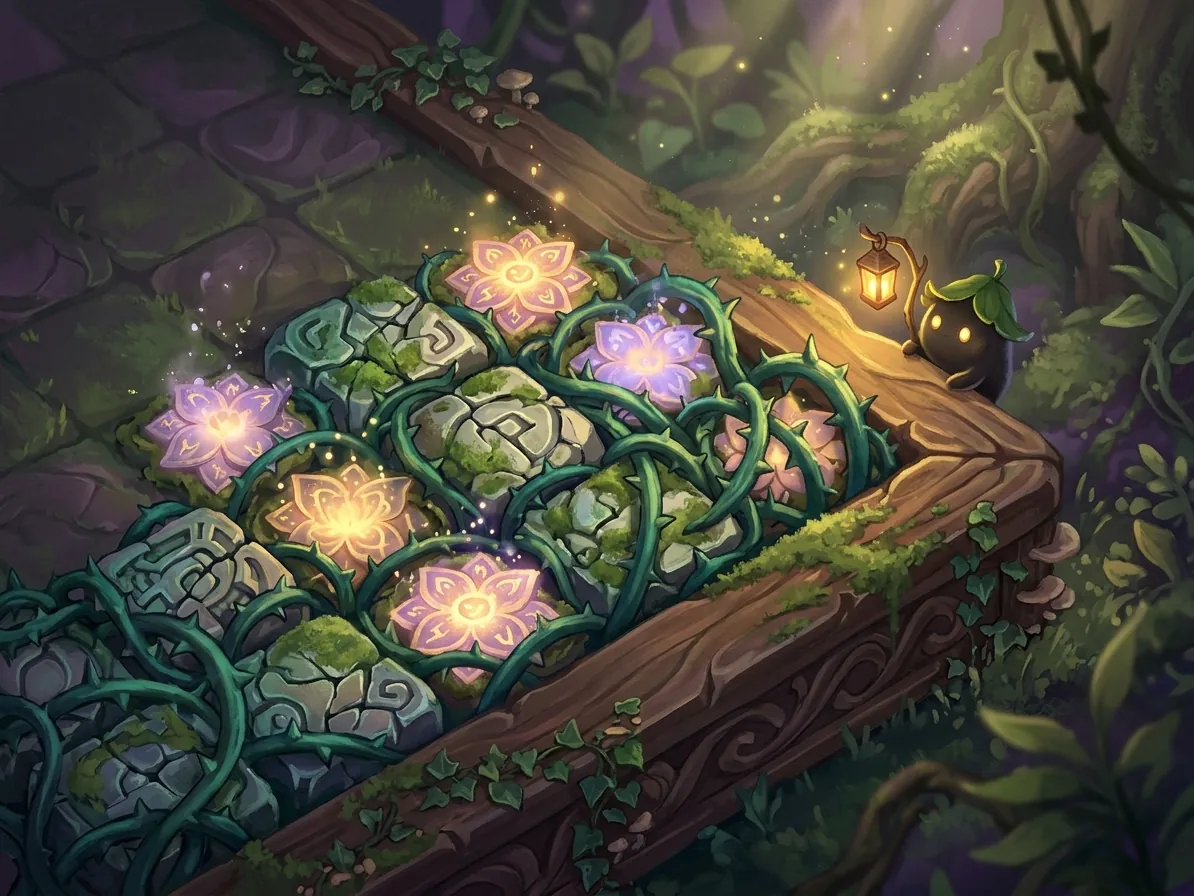
Blockers are the heart of most forest boards. Vines might wrap around tiles so they cannot move, stones may need several nearby matches to crack, and frost can cover a cell until you match on top of it.
Start with the blockers that stop the board from flowing. A wall of stone across the middle can trap the bottom half, so breaking a gap early opens the whole level. Spreading blockers, such as creeping moss that grows each turn, deserve attention before they take over.
Special tiles are your best tools here. A line-clearing tile aimed down a column of frost can do the work of several ordinary matches, so try to create them close to the trouble spots.
A simple routine for any new board
Try this sequence the next time you open an unfamiliar level.
- 01
Check the goal
Confirm exactly what the level asks for and how many moves or how much time you have.
- 02
Map the blockers
Notice which obstacles block the flow of tiles and which ones only need clearing eventually.
- 03
Look for special tile setups
Spot places where four or five matching tiles are nearly lined up and plan to complete them.
- 04
Open the board
Use early moves to break key blockers so tiles can fall freely into the hardest areas.
- 05
Save combinations for the finish
If you hold two special tiles next to each other, consider combining them when they will clear the most remaining goals.
Counting moves near the end
The final few moves of a level are where careful players gain the most. Before each move, count what you still need and ask whether this match gets you closer. A flashy combination that clears the wrong part of the board is less useful than a plain match that frees the last trapped firefly.
If you are close but not quite there, look for moves that drop several tiles into the goal area at once. And if a level ends just short, take note of what slowed you down. That insight is often the key to clearing it on the next attempt.
Related articles
 Spending energy, seeds and boosters wisely
Tips for managing energy, in-game currency and boosters in forest restoration puzzle games so you can progress steadily and play at your own pace.
Read more
 Logic puzzles of the enchanted grove, explained
An explainer on the path, rotation, light and pattern puzzles found in forest restoration games, with ways to approach puzzle types you have not seen.
Read more
 Why restoring a virtual forest feels so rewarding
An opinion piece on why forest restoration puzzle games are so satisfying, from visible progress to nurturing play, and where the formula can improve.
Read more