Logic puzzles of the enchanted grove, explained
Beyond matching boards, many forest restoration games hide quieter logic puzzles behind ancient gates and sleeping trees. Here is how the most common types work and how to think them through.
Path and flow puzzles
In path puzzles, you guide something from a start point to an end point. It might be water flowing from a spring to a dry root, a trail of light reaching a sleeping tree, or a creature finding its way home.
Usually you place or rotate pieces such as pipes, branches or stepping stones. The trick is to work backward as well as forward. Start from the destination and ask which tiles could possibly connect to it. Often only one or two options exist, and that narrows the whole puzzle.
Look for pieces with no flexibility, like corners next to walls. Locking those in first gives you solid anchors for the rest.
Rotation and alignment puzzles
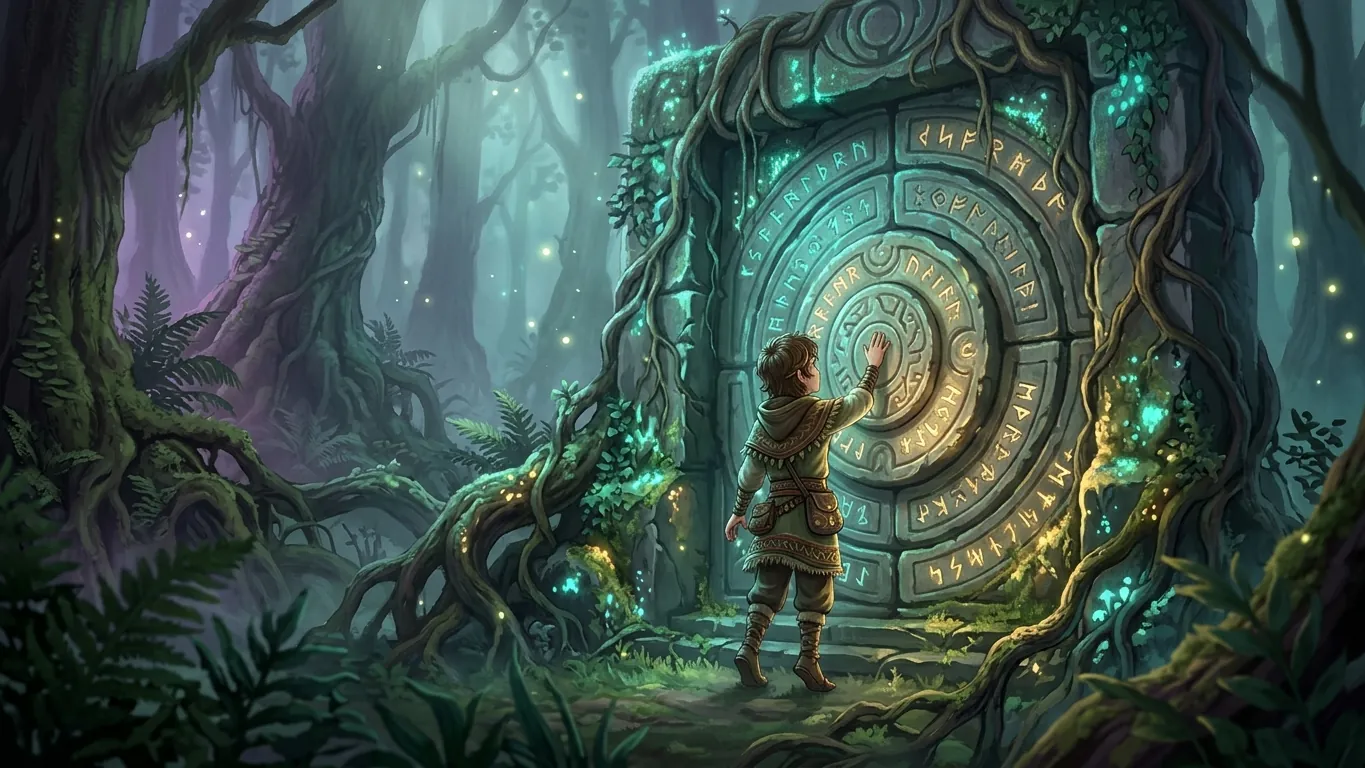
Rotation puzzles hand you a set of discs, tiles or stones that turn in place. Your job is to align symbols, connect lines or complete an image. Some pieces turn independently, while others are linked so that turning one moves its neighbors.
Linked rotations can look intimidating, but they follow rules. Try turning a single piece a full circle and watch exactly what else moves. Once you understand the links, you can plan a sequence instead of guessing.
It helps to solve one piece at a time and avoid touching it afterward. If a later move would disturb it, look for another route.
Light and reflection puzzles
Light puzzles are a favorite in forest games because they look beautiful when solved. A beam of sunlight or moonlight enters the scene, and you position crystals, mirrors or dew-covered leaves to bend it toward a target such as a dormant flower.
Start by tracing where the beam goes right now. Then identify the target and imagine the last reflection it would need. Working from both ends at once often reveals the middle step.
Watch for pieces that split a beam in two or change its color. These usually mean the puzzle needs more than one target lit at the same time.

Sorting and pattern puzzles
Sorting puzzles ask you to arrange items so that each group matches. You might pour colored dew between flasks until each holds one color, or move seeds between baskets. Pattern puzzles ask you to copy or complete a design, like arranging flowers to match a carving.
For sorting, think about free space. An empty container is valuable, so avoid filling it unless it brings you closer to a finished group. For patterns, compare the target and your current layout piece by piece instead of all at once.
Approaching a puzzle you have never seen
Sooner or later, a game will introduce a mechanic that is completely new to you. Do not worry if your first attempts feel random. Experimentation is part of learning.
Try each control once and watch what happens. Look for what cannot change, since fixed parts often reveal the intended solution. Then simplify: solve a small corner of the puzzle before tackling the whole thing.
If you are still stuck, set it aside for a while. Logic puzzles have a funny way of solving themselves in your head when you stop staring at them.
Related articles
 Why restoring a virtual forest feels so rewarding
An opinion piece on why forest restoration puzzle games are so satisfying, from visible progress to nurturing play, and where the formula can improve.
Read more
 Getting unstuck on hard forest puzzle levels
Stuck on a tough forest puzzle level? Learn how to spot what is blocking you, retry with a plan and know when a short break is the smarter move.
Read more
 Forest restoration puzzle games: the basics
New to puzzle games about restoring a magical forest? Learn the core loop, common puzzle styles and how restoration rewards your progress.
Read more